Our Organizational High Cortisol Levels are Gonna Ensure We Lose. What Can We Do About It?
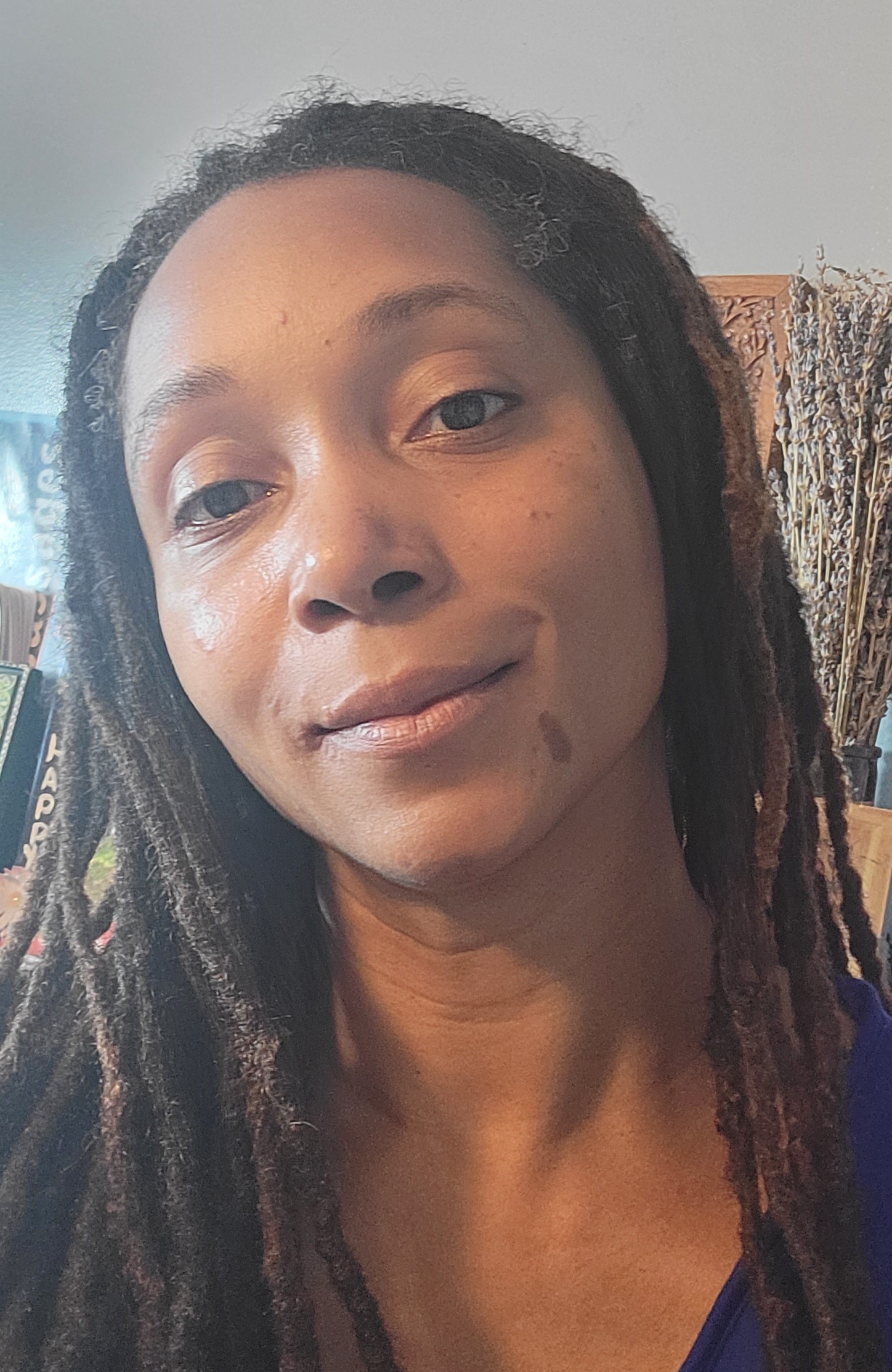
Updated: Feb 18

I’m going to start with the core message right here. You don’t have to read the entire thing to get the message, but if you want to understand why this is the message, keep reading.
Organizational survival cannot rely on the personal privilege and marginalized statuses of their leaders and staff. Systemic Durability is the process of mapping your organization's true human capacity and aligning it with your values, principles, and strategic goals. If your mission relies on your staff over-functioning, you do not have a sustainable mission—you have an extractive one.
The Shadow Budget is the invisible, uncompensated tax of emotional labor, conflict mediation, and capacity-stretching that keeps an organization afloat when its planned budget falls short due to contraction, over expansion, and where the traps of systemic oppression meet.
In 2026 I’m taking an offensive approach to uncovering this and inviting organizations to do something about it.
The Survival of the Fittest Trap
Right now, social justice oriented organizations and groups are operating in a state of high alert and so are many of their funders.
Between political attacks on equity initiatives, unpredictable funding freezes, funders changing what they now want to fund, and the sheer weight of the communities we serve, the organizational nervous system of our sector is in high fight or flight mode. We have joined the survival of the fittest belief system.
When an organization (aka organism, after all organizations only exist because people run them) is under siege, the default biological and operational response is panic. We ask our teams to do more with less. We sprint through the exhaustion. We treat the "grind" as a necessary sacrifice for the mission. I get it.
Over my 25+ year career, I have been an executive director, a membership coordinator, a program manager and officer, an outreach worker, executive assistant, a co-op developer, an organizational development consultant and more. And, I have a learned a difficult structural truth that is too poignantly being proven now:
Panic and fear-based reactions are not a strategy for long-term survival. You cannot run on high cortisol levels and expect to survive a multi-year siege.
When we try to fight systemic oppression with organizations that systematically extract from their own staff, we are doing the opposition’s work for them.
We are watching vital start-up and mature movement-led organizations, cooperatives, and community-based groups accidentally carve themselves up from the inside out. And we are doing it in response to repeated attacks on the ecosystems we are trying to create so that we can thrive and flourish. We are contributing to our own demise just when we need ourselves the most. One of the primary reasons this is happening is because too many of our organizations are secretly funded and fueled by a "Shadow Budget."
The Threat of the Shadow Budget
The expectation that Black women take care of the group and ensure that everyone's needs are met is so deeply ingrained in society and organizational culture... The load of added labor is heavy and telling us that we are 'strong' doesn't change the fact that it falls disproportionately on our shoulders. There's the labor of providing care and support to coworkers and even supervisors, which includes emotional and psychological support, counseling, and coaching." — Source: The Unseen Labor of Black Women Leaders, Nonprofit Quarterly (April 2024).
Data from multiple reports, including the one cited above, confirms what many of us already know: this invisible load is overwhelmingly carried by Black women and women of color.
When a crisis hits, organizations don't just lean on these women—they consume us. When the external threat doubles down, the organizational house falls down because it was already eaten by internal root rot.
My Story: Privilege, Scaffolding, and Learning to Flourish
I know the exact cost of the Shadow Budget because I used to be the glue that held it together. I’ve been the fix-it Black woman. The television show Scandal glamourized this role in the character Olivia Pope with her white cloak super powers.
For decades, I climbed and was pushed up the professional ladder (and by the way, the “ladder” doesn’t only apply to corporate jobs). I led grassroots organizations through financial crises, managed national partners trying to co-opt our work, and cleaned house when other people’s errors caused chaos, fracture, and harm.
Up each wrung, I eventually came back down on my own accord. A depressive episode hit me and I took time off. I recognized that I would never be rewarded sufficiently for my positively impactful contributions so I quit and paused until I figured out what I wanted to do next. Family crises and losses pulled me down the ladder. And even now, a chronic disease diagnosis is compelling me to recalibrate my footing on the ladder again.
Over the years I have engineered my ways up and down the ladder with my practiced self-awareness and intuition. I instituted fierce boundaries. I protected my time before 10 am as sacred time so I don’t start work before then. As an executive director, I capped my work week to 35 hours a week and eventually shifted the organization to a 4 day work week. I learned to draft clear auto email responses to let others know what to expect of my capacity and when.
My efforts alone didn’t secure these pauses and breath breaks. I hold a massive amount of privilege. I have the educational privilege of an Ivy League degree, class mobility, and a supportive marriage that provided the financial and emotional safety net I needed to take a pause, go to therapy, and reorient. To have been able to do this multiple times.
That privilege was the scaffolding that allowed me to heal. But here is the problem: Organizations cannot rely on the personal privilege of their leaders to survive. A Black woman should not need a dual-income household and an Ivy League degree just to have the right to experience clinical depression without losing her livelihood. We cannot build sustainable movements on the backs of individual resilience. We must build structural privilege into our operating models.
The Shift to Systemic Durability
I love some self-care, and, we don't need more "self-care" webinars. We don't need the #softlife aesthetic, which ignores the very real, grueling work required to build power, durability, joy, and well-being.
In her book Real Self-care…, Dr. Pooja Laksheem offers four principles for real self-care: setting boundaries, moving toward self-compassion, becoming clear on your values, and asserting your power. These are not things you do; they are ways you are. They are internal processes that allow you to make decisions that are right for you, rather than decisions that are right for the systems you live in." I get down with that.
AND, organizations need to learn to protect themselves with at least the same principles.
We need Systemic Durability
Organizations that are surviving this current climate are doing so because they are willing to take the time that it takes to look under the hood. They are auditing their Shadow Budgets, prioritizing staff retention over relentless expansion, and building structures that can actually hold their leaders when they are human, rather than punishing them for not being machines.
Systemic Durability requires a strategic pause. The pauses can look different. However, if organizations that can don’t do this, even the strong won’t survive. If you think that sounds too radical, look at Movement Alliance Project, Social Justice Fund NW, and CompassPoint. They all hit the brakes on external work to audit their internal capacity. They didn't lose their funding; they fortified their futures. Are we going to keep running from sprint to sprint until the staff breaks, or are we going to map our capacity and build a structure that lasts?"
Building the Plane While Flying It
And, most organizations simply cannot afford to hit 'stop' on their essential operations and core program areas just to 'figure things out.' Is it possible to do the mapping work without shutting everything down? My theory is that it is. This does not have to be an all or nothing journey, however, deep intention is needed to reorganize, redistribute, and allow people to come together.
I’m working to integrate a different approach to change work. It is entirely possible to do the heavy lifting of systems mapping while sustaining the critical work of today.
This approach is backed up in models like the ambidextrous organization, bimodal operations, and action research/action learning.
The Strategic Pause
2026 is a year of another strategic pause for me. I am keeping up my core operations while working to integrate my consulting practice, Medley Transitions, with my heart and culture work - the Black Women at Home Project. They go together in spectacular ways I can’t wait to show you more about it and invite you to join me in the pause to try some things out.
I’m sharing this article because it’s what is on my heart and starting to take up more of my time. I really believe that we need to change our collective belief system about what is possible towards abundance, creativity, and a knowing that we can and will take care of each other, no matter what.
Comments